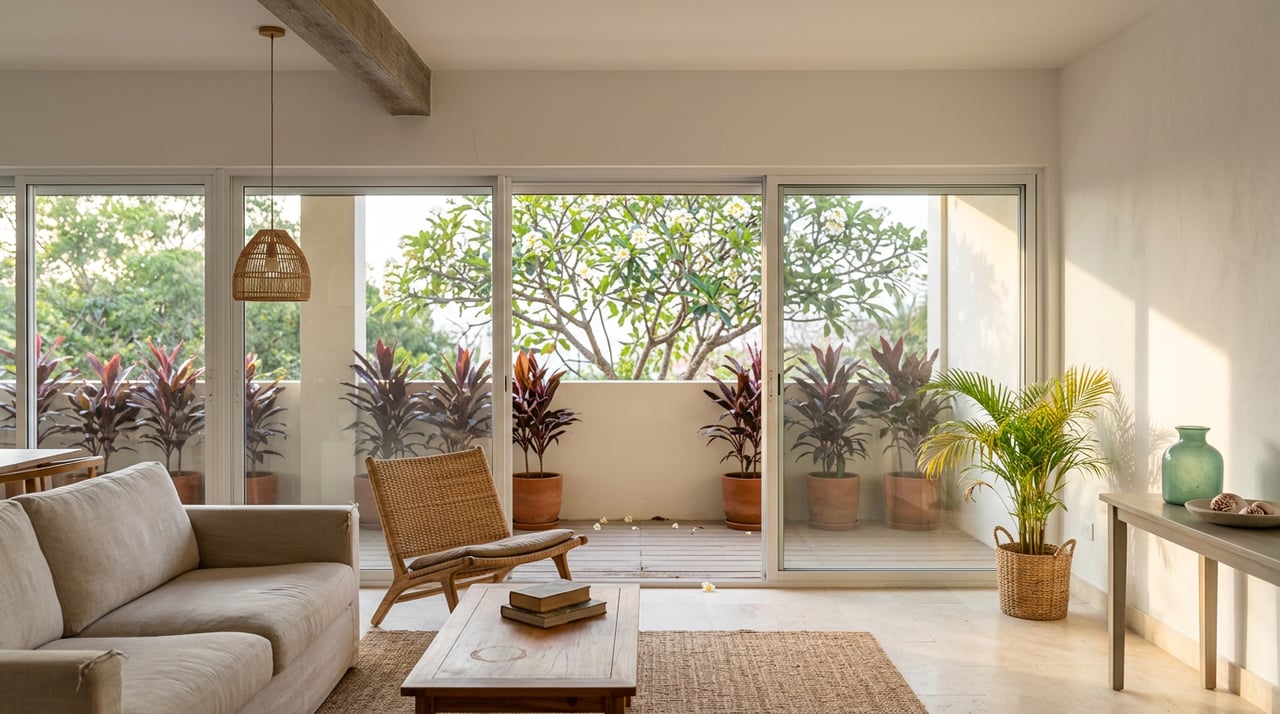
Search "homes for sale in Lahaina" today and you'll get a single scrolling list. An oceanfront lot in the burn zone sits three rows above a fully renovated condo at Kahoma Village. A Puamana unit still waiting on its building permit shows up next to a beachfront studio that never lost a shingle. They all wear the same place name. They do not behave anywhere close to the same way once you're under contract.
That distinction matters more this month than it has in three years. On Saturday, August 1, 2026, Front Street reopened to through traffic for the first time since the wildfire, a moment Maui Now and several statewide outlets covered as a genuine milestone. It's also the kind of headline that makes a search list look more unified than it is. If you're comparing Lahaina to other West Maui or South Maui neighborhoods right now, the single most useful thing you can do is stop treating "Lahaina" as one market and start asking which of the two markets a given listing actually belongs to.
Two Products, One Search Bar
The Realtors Association of Maui tracks condominiums, single-family homes, and vacant land as separate categories because they move on different clocks and different financing rules. Most public listing portals don't preserve that separation for a casual browser. The result is a search experience where a move-in-ready condo and a fire-affected parcel appear as interchangeable options, when in practice one closes like a normal Maui transaction and the other closes like a construction project with a real estate wrapper.
That gap shows up clearly the moment you look at what actually sold in the first half of 2026.
The Condo Number That Doesn't Match the Regional Story
West Maui's condominium market softened almost everywhere in the first half of 2026. Across the region overall, closed sales rose 22 percent, from 121 to 148, while the median sale price eased from $775,000 to $699,000 and days on market stretched from 135 to 171. Break that regional number down by corridor and the softening shows up almost everywhere: Napili, Kahana, and Honokowai saw the median drop from $630,000 to $550,000, with days on market climbing to 185, and Kaanapali's median slipped from $1,175,000 to $1,100,000.
Lahaina moved in the opposite direction. Closed condo sales more than doubled, from 11 to 24 year over year, and the median sale price rose from $550,000 to $651,250. Days on market did lengthen, from 69 to 106, but that's still the fastest pace of any corridor in West Maui this year.
That's not a market cooling off. It's a market where the pool of standing, insurable, move-in-ready condos got smaller relative to the number of people who want one. Some of that demand comes from displaced households looking for a permanent replacement rather than another year in temporary housing. Some comes from buyers who priced land and rebuild timelines, decided they didn't have the patience for either, and shifted their search to whatever in Lahaina was already built and livable. Either way, if your mental model of Lahaina real estate is "prices are down because of the fire," the condo data from this year says otherwise for existing inventory.
The Other Lahaina Runs on a Permitting Clock, Not a Market Clock
The second Lahaina, the one built from vacant lots and mid-construction rebuilds, is telling a completely different story, and it's the one carrying most of the headlines.
As of late July 2026, Maui County reported 315 homes under active construction, 577 residential units rebuilt or newly completed, and 667 residential building permits issued, with another 597 still working through approval, against roughly 2,200 structures lost in the fire, according to reporting from the Honolulu Star-Advertiser. Officials say rebuilding plans now exist for 81 percent of impacted properties, but they're candid that financing gaps, insurance shortfalls, and rising construction costs continue to slow how many of those plans turn into finished homes.
Front Street's commercial core is even further behind. As of early August 2026, county officials point to only five buildings there with historic district approval: 612 Front Street, 632 Front Street, and three properties on the 700 block, 714, 724, and 764, the last known as the Yonker Building. The "Fleetwood" building at 744 Front Street, the only structure still standing in that block after the fire, was described by the county as still on the verge of approval rather than already cleared. The county's interim fix, a nonprofit-run marketplace called 'Ulu o Lele on the former Outlets of Maui site, is expected to open this fall as a two-year bridge while permanent commercial rebuilding catches up.
Puamana offers a useful close-up. One of its buildings, Building 21, was among the first in the community to receive rebuild permits, with construction originally scheduled to start in May 2026 and wrap roughly a year after that. Building 25 is being rebuilt as well. Meanwhile, some of Puamana's shared amenities, including its oceanfront pool, have already reopened, while the clubhouse remains under reconstruction. That's a community where a buyer can own a finished pool, an unfinished clubhouse, and a unit still mid-rebuild, all inside the same HOA statement.
Why the Financing Doesn't Match the Photos
This is where the two markets stop being an abstract distinction and start affecting what a buyer can actually close on.
A standard Maui home purchase typically supports loan-to-value around 80 percent. Lenders and title companies working fire-affected Lahaina parcels report loan-to-value more commonly running 50 to 65 percent, which means a buyer needs 35 to 50 percent down before a lender will even engage, plus a reserve in the range of $50,000 to $100,000 to cover environmental clearance and permitting costs before construction financing activates. Environmental review alone can run $8,000 to $25,000, permitting queues have been running 18 to 24 months, and any parcel inside the Lahaina Town historic district boundary, which covers much of the fire-affected area, requires a State Historic Preservation Division review that can add another 60 to 180 days before a permit is issued.
Property taxes carry their own asymmetry. Maui County assesses vacant land awaiting reconstruction at the non-owner-occupant rate of $9.37 per $1,000 of value, compared to $6.05 per $1,000 for owner-occupants, which adds a real carrying cost for anyone holding an undeveloped lot through a multi-year permitting process.
None of this shows up in a listing photo. It shows up in the closing documents, and it's the reason two properties both labeled "Lahaina" on the same search page can require completely different buyer profiles, timelines, and cash positions.
What This Means If You're Comparing Neighborhoods
If you're drawn to Lahaina for its history, its harbor, or its proximity to Kaanapali and the rest of West Maui, the first useful question isn't "what's the median price." It's "which Lahaina am I actually looking at."
If you want something you can move into or rent out this year, you're competing in a condo market that tightened in 2026 even as the rest of West Maui gave buyers more room to negotiate. Expect less leverage on price and a shorter runway to make a decision on well-priced units.
If you're drawn to the idea of building new in a rebuilt Puamana or a cleared Front Street lot, you're underwriting a longer and more capital-intensive process than a typical Maui purchase, with financing terms, tax treatment, and permitting timelines that differ meaningfully from what a standard mortgage calculator assumes. The growing inventory of vacant Lahaina parcels reflects, in part, owners who ran those same numbers and decided selling made more sense than rebuilding.
Either path can be the right one. The mistake is assuming both paths look the same because they share a zip code.
A Few Questions Worth Asking Before You Search
Is Lahaina a buyer's market or a seller's market right now? Both, depending on the product. The standing condo corridor behaved like a tightening, seller-favorable market through the first half of 2026. Vacant land and rebuild-stage properties behave more like a specialized, patience-required market where pricing reflects financing friction as much as square footage.
Can I get a conventional 30-year mortgage on a fire-affected lot? Generally not on raw land awaiting environmental clearance. Conventional lenders tend to treat that collateral as non-conforming, which pushes buyers toward portfolio lending, private financing, or construction-to-permanent structures instead.
Why did days on market go up in Lahaina if prices went up too? Fewer total listings changed hands, so each closed sale carries more weight in the average, and some of those sales involved more complex underwriting that simply takes longer to reach the closing table, even in a corridor with strong buyer interest.
If you're weighing a purchase in Lahaina, or trying to figure out whether a listing you found is a finished home, a rebuild in progress, or a parcel still waiting on its permit, that's exactly the kind of distinction worth talking through before you write an offer. Dennis Carhart has spent two decades working Maui's markets through cycles like this one and can walk you through what a specific Lahaina property actually requires, financially and logistically, before you commit. Let's Connect.