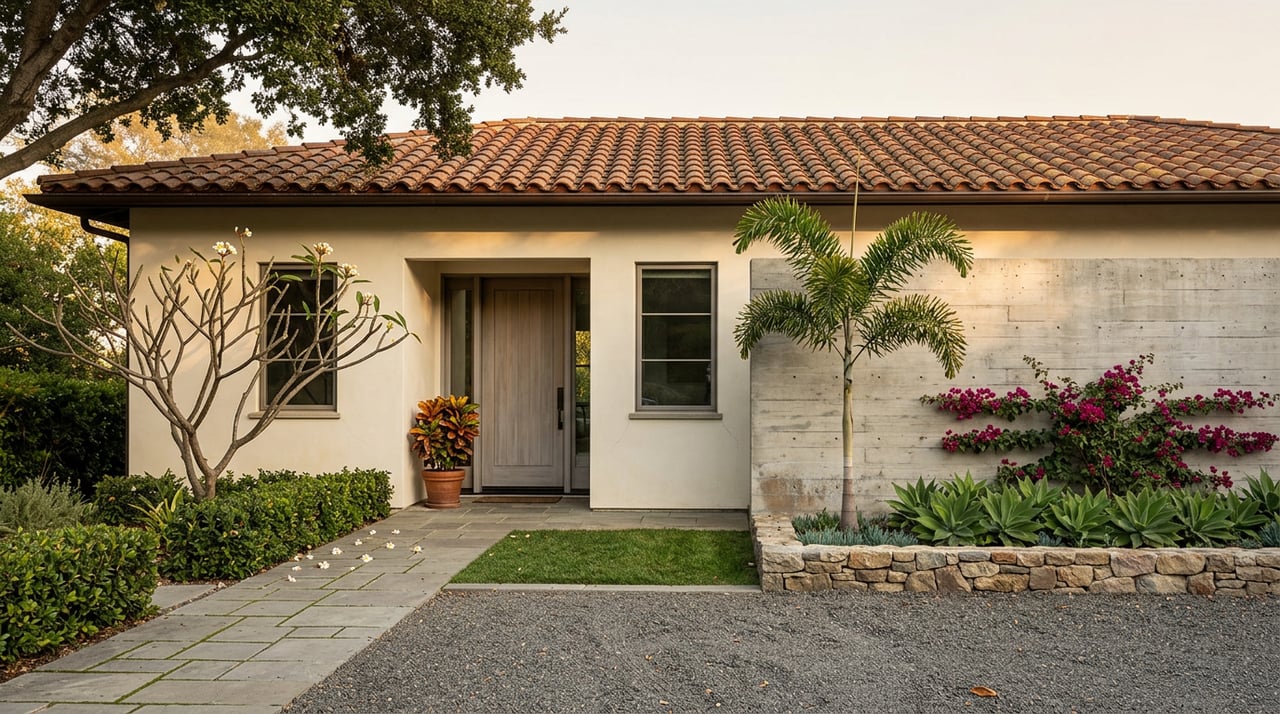
What decides the final price on a Maui Meadows half-acre? Ask a buyer's agent working this neighborhood and the answer rarely has anything to do with the ocean view or the size of the lanai. More often, it comes down to what's in the ground underneath the driveway.
Maui Meadows was carved out of Haleakala's lower slopes in the 1970s into roughly 600 lots, most of them a half-acre or larger, and to this day no municipal sewer line runs through the subdivision. Every property up here relies on a cesspool or a septic tank, a fact that sets the neighborhood apart even from other parts of South Maui, where county sewer service reaches sections of Kihei and Wailea. That single infrastructure detail, more than square footage or the difference between a renovated kitchen and an original one, is what shapes how a Maui Meadows sale actually plays out at the negotiating table.
Every Lot Answers the Same Question, Just Not the Same Way
Because there's no sewer alternative, every seller in the neighborhood fills out the wastewater section of Hawaii's standard Seller's Real Property Disclosure Statement one of two ways: cesspool, or septic. Homes built before the state began requiring septic systems for new construction in the early 1990s generally still have cesspools, unless a previous owner already paid to convert. Homes built or upgraded since then run on septic tanks sized to the number of bedrooms.
That distinction isn't a formality buried in paperwork. It changes what a lender expects to see during underwriting, what an appraiser treats as comparable, and how much room a buyer has to negotiate on price before the deal closes.
The Blue Rock Underneath Changes the Bid
What makes the math different here than elsewhere on Maui is the geology. Drive the cut on Piilani Highway below Maui Meadows and you can see the layered blue rock and cinder that crews have worked around since the subdivision's earliest lots were cleared. Cesspools built on those lots tend to run shallow, often just 10 to 12 feet deep, because the rock and cinder layer beneath absorbs effluent well enough that a deeper pit was never needed.
That's convenient for percolation, but it complicates conversion. A septic system engineered for a lot where fractured rock sits close to the surface can cost meaningfully more to install than a comparable system on a lot where the cinder drains easily, because drainfield design depends on how the site actually perforates. Two houses a quarter mile apart on the same street can carry very different engineering bids for the identical fix, which is exactly the kind of detail a generic wastewater guide from off-island won't tell you.
What Changed on July 8
The regulatory backdrop hasn't shifted much since 2017, when Governor Ige signed Act 125, requiring every cesspool in the state to be upgraded, converted to septic, or connected to sewer by January 1, 2050. That followed a 2016 measure that banned the construction of new cesspools statewide, closing off the option entirely for new builds.
What did change, about a month before this was written, is how a homeowner pays for that conversion. On July 8, 2026, Governor Josh Green signed House Bill 1618, creating a Cesspool Conversion Revolving Loan Fund administered by the Hawaii Green Infrastructure Authority. The fund is built to offer low-interest or forgivable loans to eligible homeowners covering the cost of upgrading or converting a cesspool. It doesn't move the 2050 deadline and it doesn't waive the disclosure requirement. What it does is hand both buyers and sellers in Maui Meadows a financing lever that simply didn't exist as recently as this summer.
Here's how the two scenarios tend to differ once a property goes under contract:
| Property still on a cesspool | Property already converted to septic | |
|---|---|---|
| Disclosure | Required under the wastewater section of the state's disclosure statement | Same requirement, backed by documented compliance |
| Appraisal treatment | Nearby completed conversions can pull the appraised value down | Tends to hold value against cesspool-only comps |
| Typical buyer ask | Price credit near the estimated conversion cost | Rarely a line item in negotiation |
| Lender scrutiny | Some lenders review the system more closely during underwriting | Generally treated like any other septic-served property |
Why the Appraisal Can Move Before the Ink Dries
The mechanism behind that appraisal row is straightforward once you see it. An appraiser working a Maui Meadows file pulls comparables from the same half-acre lot pattern, and if a recently sold home down the street has already completed its cesspool-to-septic conversion while the subject property hasn't, that gap becomes part of the valuation. It works the same way a renovated kitchen lifts a comp, just running in the opposite direction.
On the negotiation side, it plays out about as predictably. Buyers who've done their homework are increasingly asking for a credit near the estimated cost of a future conversion rather than absorbing the full future expense themselves. Conversion costs on Maui commonly run from $20,000 to more than $50,000 depending on soil conditions, slope, and distance from the house to the new system, so that ask isn't a rounding error. It's also not unreasonable in a market where single-family inventory reached 8.1 months of supply by June 2026, giving buyers more room to negotiate than they've had in years.
The Paper Trail Worth Chasing Before You Write an Offer
None of this has to be guesswork on the buyer's side. A specific parcel's wastewater system can usually be confirmed through county records before an offer goes in, not after. If a listing doesn't specify which system is in place, or the permit history looks thin, that's worth resolving directly with the seller, and worth a call to Maui County's Department of Environmental Management, which handles wastewater and cesspool pumping questions for the county.
For anyone actually facing a conversion, whether it's a condition of a sale, triggered by a remodel that adds a bathroom, or simply a decision to get ahead of the 2050 deadline while financing options are expanding, a wastewater contractor who knows Maui Meadows' specific soil conditions is worth a call before the county is. Valley Isle Pumping, which has worked wastewater systems on Maui since 1977, and Maui Septic Solutions both work in this exact terrain and can speak to what a given lot's rock and cinder profile means for cost.
A Few Questions Worth Asking Before You Write an Offer
Does every Maui Meadows property have a cesspool? No. Homes built or converted since the state's early-1990s septic requirement for new construction run on septic tanks, not cesspools. The neighborhood is a mix, and the answer for any one property has to come from its own permit history, not from an assumption about the neighborhood as a whole.
Will I be forced to convert before I can sell? Not automatically. The state's 2050 deadline applies to the property, not to the timing of a sale, so a cesspool doesn't have to be converted before closing. It does have to be disclosed, and depending on the buyer's financing and negotiating position, it may surface as a credit request rather than a hard requirement.
Does the 2050 deadline actually affect financing today? Increasingly, yes. Appraisers and some lenders are starting to factor future conversion costs into how they treat a property, particularly when nearby comps have already converted. The loan fund created this July is meant to make that financing conversation easier, not to remove it from the table.
Whether you're weighing a cesspool-served cottage against a converted estate a few doors down, or you're the one deciding whether to convert before you list, the number that actually matters isn't on the spec sheet. It's in the permit file. Dennis Carhart has spent two decades working these half-acre lots and can walk you through what a specific property's wastewater history means for your offer or your asking price. Let's Connect.